Avoid these 7 mistakes when hiring camp kitchen staff
Kitchen hiring goes wrong in predictable ways — starting too late, vague roles, skipped references. Seven mistakes and how to avoid each one.
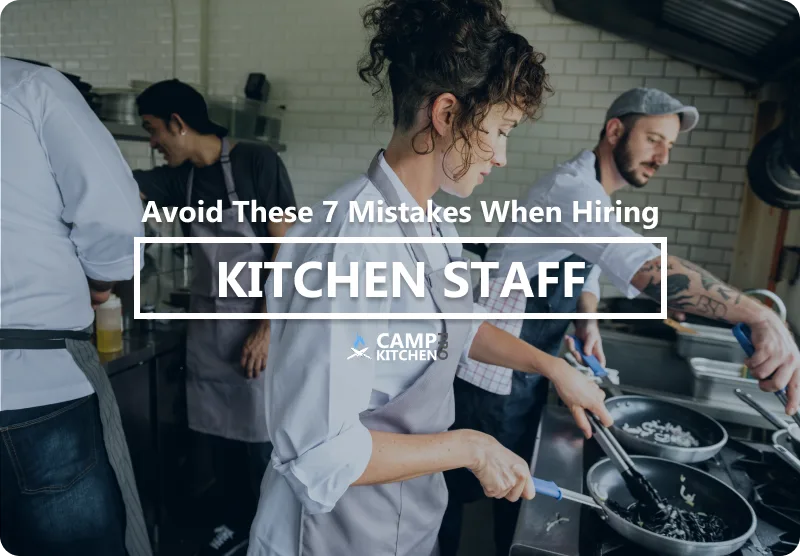
The kitchen is the one department that has to perform from the very first meal. There is no ramp-up week, and a hiring mistake made in March is still being felt in August.
These are the seven that come up most often.
1. Hiring too late
Experienced cooks commit early. By April, most of the people you want have already accepted something else.
Start in January or February, and treat the kitchen hiring timeline with the same seriousness you give camper enrollment.
2. Not defining the roles
“Kitchen staff” covers a head cook, a prep cook, a dishwasher, and a food service director — four different jobs with four different skill levels.
A vague posting attracts applicants who cannot do the work and puts off the ones who can. Write a separate posting for each role.
3. Overlooking culture fit
Technical skill does not carry someone through a camp summer. The environment is communal, the hours are long, and the team lives together.
Ask about adaptability and how someone handles pressure. A competent cook who cannot work with a young seasonal team will not last the season.
4. Skipping reference checks
A short conversation with a former supervisor tells you what a résumé cannot: whether they showed up, how they took feedback, how they behaved in a rush.
In a high-pressure kitchen, reliability matters as much as ability. Make the calls.
5. Ignoring housing logistics
Out-of-town staff need to know where they are sleeping and what they will eat before they accept. Leaving it vague costs you people after they have already said yes.
Send a welcome document that spells out accommodation, meals, time off, and what to bring.
6. Not planning for backup
Somebody will get sick, and somebody will leave mid-season. If a single person is the only one who can run a station, that is a scheduling emergency waiting to happen.
Cross-train on the critical tasks and keep a short list of part-time or on-call people you can reach.
7. Underestimating onboarding
Handing someone an apron and pointing at the walk-in is not onboarding. New staff need a structured introduction to safety protocols, station routines, and how the team communicates.
A written checklist covering the first week does more for retention than almost anything else — and it means the same standards survive the next turnover. Getting the right operations in place before the season makes every one of these easier.
Hiring well is cheaper than hiring twice. If you want to see how a documented kitchen makes onboarding faster, book a demo and we will walk through it.