Inventory planning tools for camps: run a smarter kitchen
What inventory planning software does for a camp kitchen — real-time stock, demand forecasting, automated ordering — and how to get value out of it.
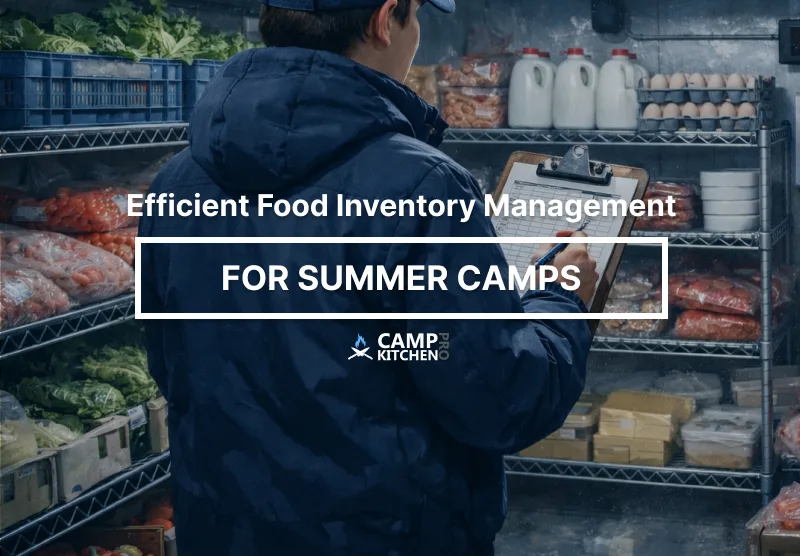
Most camp kitchens still run inventory by hand: a clipboard walk of the walk-in, a spreadsheet updated when someone remembers, and an order built largely from instinct.
It works, in the sense that meals get served. It also produces the same recurring problems every season.
What manual management costs
Counting by hand means you are always slightly wrong, in one direction or the other — either sitting on stock that will spoil or discovering a shortage at 6 a.m.
Scaling recipes by hand introduces arithmetic errors that waste both time and ingredients. Staff turnover means whoever knew the system is gone by next June. And tracking food cost accurately enough to act on takes more hours than anyone has mid-season, so it usually gets done once, at the end, when nothing can be changed.
What these tools actually do
Four things, at minimum:
- Real-time stock visibility — what is on hand right now, across every storage location
- Demand forecasting — projected need based on menus and headcount, rather than a guess
- Automated purchase orders — built from stock levels and par thresholds instead of retyped
- Cost monitoring — spend tracked as it happens, while there is still season left to respond
Where the improvement comes from
Less waste, because ordering matches what the menu genuinely requires rather than what looks about right.
Better budget control, since accurate forecasting removes the habit of over-buying as insurance.
Faster training, because a system a seasonal hire can pick up in a morning beats an undocumented process that takes weeks.
Continuity between seasons, which is the one that compounds. Historical data means next year’s planning starts from what actually happened this year — which pairs directly with efficient meal planning for summer camps.
Getting value out of it
A few practices separate the camps that benefit from the ones that end up with an expensive spreadsheet:
Update inventory often — a system reflecting last week is worse than useless, because people trust it. Set minimum thresholds on the items you cannot run out of. Use previous seasons when projecting, rather than starting each spring from zero. And train the whole kitchen, not just the manager, or the data quality collapses the first time that person is off.